
29th Infantry Division Campaign Map
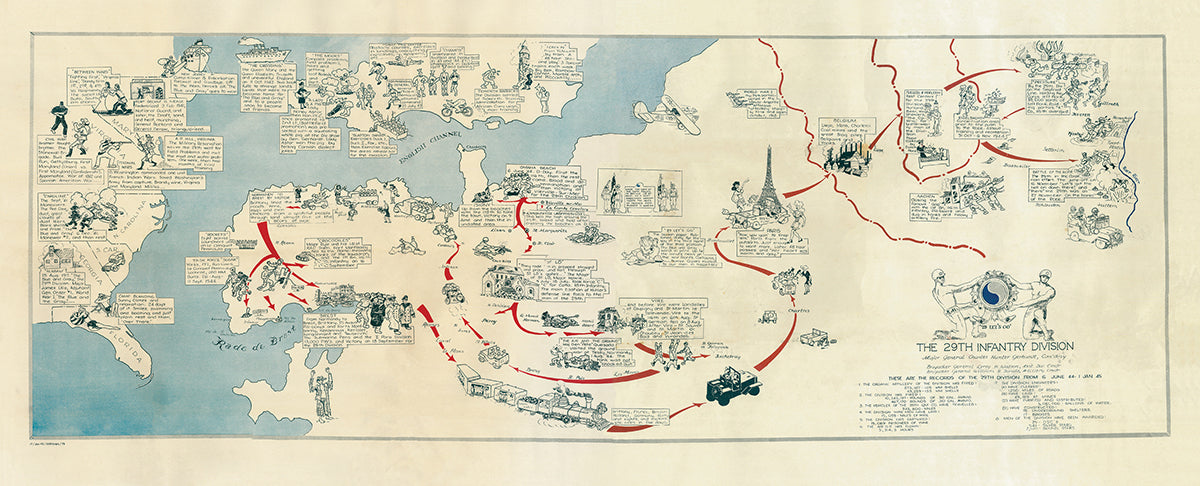
From Omaha Beach to Saint-Lô, Brest, the Roer, and the Elbe, the Blue and Gray Division fought from D-Day into Germany.
Size:
42 x 17
29th Infantry Division Campaign Map
If you have any questions, you are always welcome to contact us. We'll get back to you as soon as possible, within 24 hours on weekdays.
-
Shipping Information
Use this text to answer questions in as much detail as possible for your customers.
-
Customer Support
Use this text to answer questions in as much detail as possible for your customers.
-
FAQ’s
Use this text to answer questions in as much detail as possible for your customers.
-
Contact Us
Use this text to answer questions in as much detail as possible for your customers.
29th Infantry Division Campaign Map
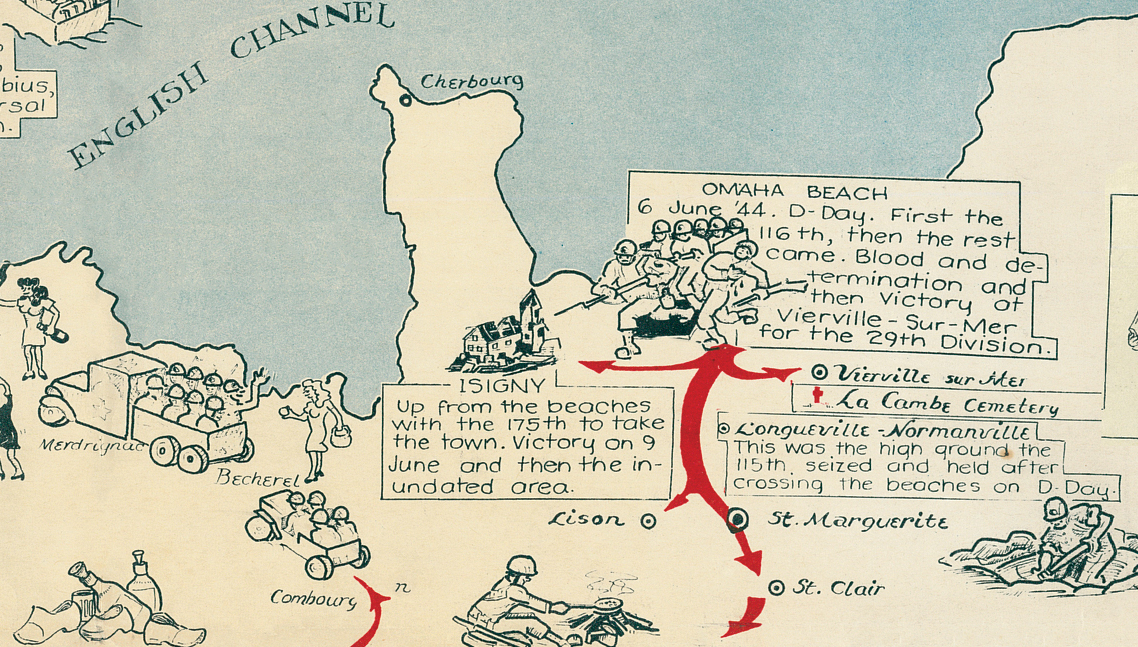
The 29th Infantry Division’s World War II route began on Omaha Beach, where the Blue and Gray Division entered combat on D-Day. The 116th Infantry Regiment landed in the first assault wave alongside the 1st Infantry Division and suffered severe losses in the opening hours, while the rest of the division came ashore and pushed inland from the beachhead.
In the weeks after D-Day, the 29th fought through the Normandy bocage toward Saint-Lô, a key road center blocking the Allied breakout. The division opened its push toward the city in mid-June and entered Saint-Lô on July 18 after hard fighting around ridges, villages, and hedgerow positions. After Normandy, the division turned west into Brittany and took part in the assault on Brest, helping reduce the fortified port in September 1944.
The 29th then moved toward the German frontier. In the autumn it fought along the Teveren-Geilenkirchen line and advanced toward the Roer, reaching the river by the end of November. After holding positions through the winter, the division crossed the Roer in February 1945, moved through Jülich and München-Gladbach, and later pushed to the Elbe. The map shows a campaign that began with the shock of Omaha Beach and ended with the division deep inside Germany.
PAPER & PRINTING
Printed on archival-grade, acid-free matte fine-art paper with a natural surface for crisp detail, accurate color, and lasting display quality.