
36th Infantry Division Campaign Map
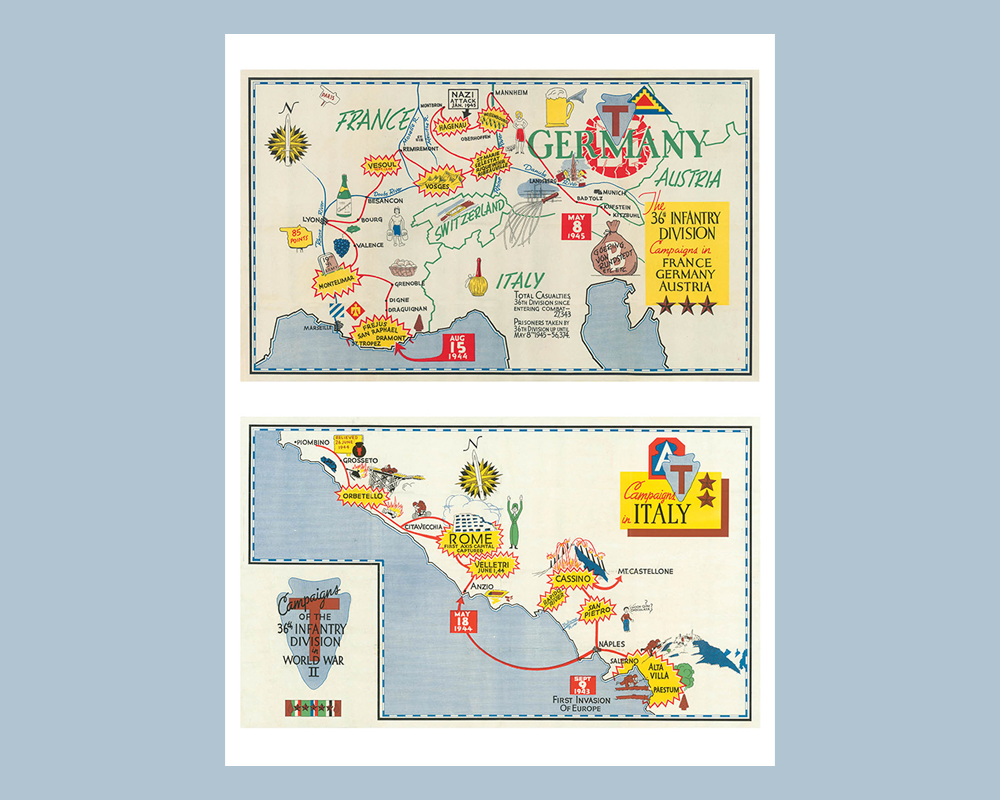
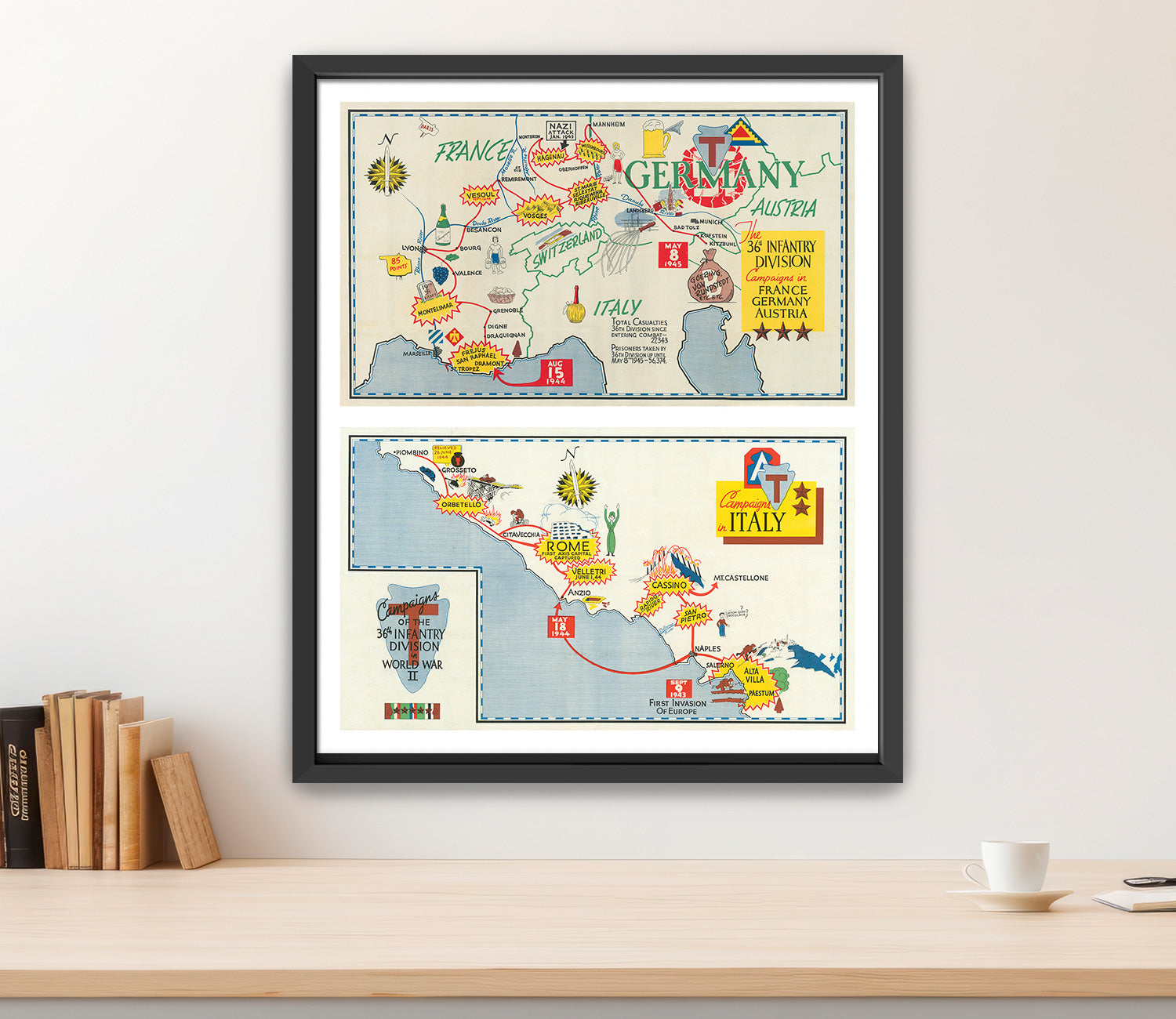
From Salerno and the Rapido to Anzio, southern France, Alsace, the Rhine, and Bavaria, the Texas Division fought across two theaters.
Size:
18 x 24
36th Infantry Division Campaign Map
If you have any questions, you are always welcome to contact us. We'll get back to you as soon as possible, within 24 hours on weekdays.
-
Shipping Information
Use this text to answer questions in as much detail as possible for your customers.
-
Customer Support
Use this text to answer questions in as much detail as possible for your customers.
-
FAQ’s
Use this text to answer questions in as much detail as possible for your customers.
-
Contact Us
Use this text to answer questions in as much detail as possible for your customers.
36th Infantry Division Campaign Map
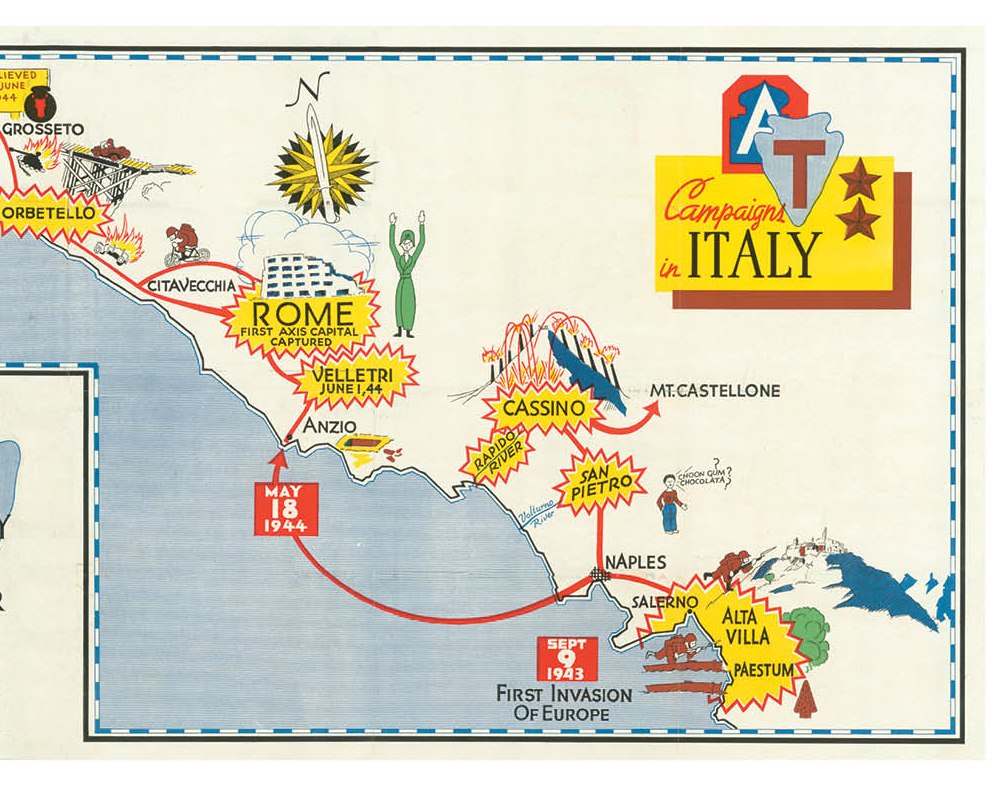
The 36th Infantry Division’s World War II route began in the Mediterranean and ended deep inside Germany. Known as the Texas Division, it first entered combat at Salerno in September 1943, landing near Paestum and helping hold the beachhead against strong German counterattacks. From there, the division moved into the hard winter fighting of the Italian campaign.
Its route through Italy was marked by mountains, rivers, and fortified German positions. The division fought around Mount Maggiore, Mount Lungo, and San Pietro before taking part in the costly Rapido River operations near Cassino. After rest and rehabilitation, the 36th reentered combat at Anzio, broke out of the beachhead, captured Velletri, and entered Rome in June 1944.
In August, the division made another assault landing, this time in southern France. It advanced rapidly up the Rhône Valley, helped trap German forces near Montélimar, and pushed toward the Vosges and Alsace. Fighting continued through the Colmar region and along the Rhine before the division crossed into Germany in 1945. The map shows a campaign shaped by repeated landings, difficult terrain, and a long movement from Italy’s mountain roads to the final advance in southern Germany.
PAPER & PRINTING
Printed on archival-grade, acid-free matte fine-art paper with a natural surface for crisp detail, accurate color, and lasting display quality.